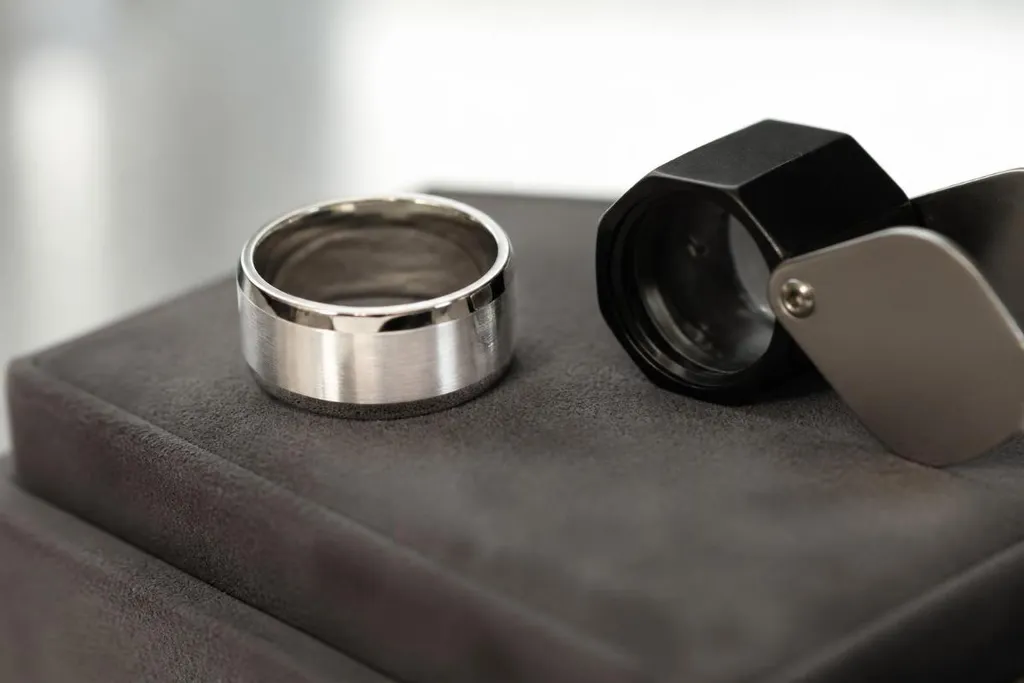
A polished wedding band has an appealing clarity of purpose. There are no gemstones competing for attention and no decorative textures required to give the ring its identity. Instead, the design depends on the quality of the precious metal, the proportions of the band and a smooth reflective surface that catches light naturally. It is a traditional formula, yet one that can look remarkably contemporary when the details are carefully chosen.
For anyone exploring timeless mens plain polish wedding band designs, simplicity makes seemingly small decisions particularly important. Band width, profile, metal and thickness all influence how a polished ring appears on the hand. Because there is no additional ornamentation to distract the eye, good proportions become the defining feature—and comfort matters just as much for a ring intended to be worn every day.
Why a Polished Finish Remains a Classic
A polished finish creates a smooth, highly reflective surface that allows the natural colour of the metal to take centre stage. It is one of the most established treatments for wedding jewellery, but its longevity is not simply a matter of tradition.
The absence of decorative texture makes a polished band versatile. It can sit naturally alongside a formal watch, work with casual clothing and remain appropriate as personal style changes over time.
Light also behaves differently across different profiles. A rounded band produces softer, moving reflections across its curved surface, while a flatter polished band can create broader, more defined flashes of light. This means two plain rings made from the same metal can have noticeably different characters.
For someone who prefers minimal jewellery, that subtle distinction may provide all the individuality required.
Choose Width and Profile Together
Width is often the first measurement considered, but it should not be selected independently from profile.
A narrower polished band tends to look refined and discreet. It can suit slender fingers or someone who is unfamiliar with wearing jewellery and wants the ring to feel visually restrained.
A wider band creates greater presence and exposes more polished metal, making its reflective finish more noticeable. This can look particularly balanced on broader hands, although finger length should also be considered. An excessively wide band can feel restrictive on shorter fingers.
Profile changes both the appearance and wearing experience. A traditional court profile has a curved outer surface and rounded interior, giving the ring a softer silhouette. Flatter profiles provide cleaner lines and a more architectural interpretation of the classic polished band.
Softened edges can offer a useful middle ground, maintaining visual structure without feeling overly sharp between neighbouring fingers.
Let the Precious Metal Define the Character
With a plain polished ring, metal choice becomes especially visible because there are no stones or surface patterns to alter its appearance.
Platinum offers a naturally white tone and substantial feel. Its polished surface gradually develops a distinctive patina through wear, which can be professionally refinished if a brighter appearance is preferred.
White gold provides a similarly cool aesthetic, although its bright white finish is commonly achieved through rhodium plating. Depending on wear, that surface may require periodic renewal.
Yellow gold transforms the same simple design through warmth alone. A polished yellow gold band has an unmistakably traditional fine-jewellery character and can coordinate naturally with existing gold accessories.
Rose gold provides a softer, warmer alternative. On a completely plain ring, its distinctive colour becomes the principal design feature rather than merely a background element.
Expect the Finish to Evolve With Everyday Wear
A newly polished wedding band has a mirror-like brightness, but no ring worn continuously will remain completely untouched.
Fine scratches and surface marks develop through ordinary contact with desks, door handles and everyday objects. They are particularly visible initially on a highly reflective surface because of the contrast with the original finish.
Over time, those individual marks can blend into a softer overall appearance. Some wearers enjoy this natural evolution, while others prefer periodic professional polishing.
Practical habits can reduce unnecessary damage. Removing the ring during heavy manual work or activities involving significant impact is sensible, particularly where there is also a risk to the finger.
Fit should receive equal attention. Wider bands may feel tighter than narrow rings because more metal contacts the finger, so sizing with a sample of similar width can provide a more accurate result.
Final Thought
A polished men’s wedding band demonstrates that simplicity does not mean an absence of design. Width, profile, metal and proportion all become more important when the surface is deliberately left clean.
The strongest choice is one that feels appropriate on the individual hand and comfortable throughout everyday life. With the right proportions, a plain polished wedding band needs little embellishment to remain relevant; its restraint is precisely what allows the design to endure.